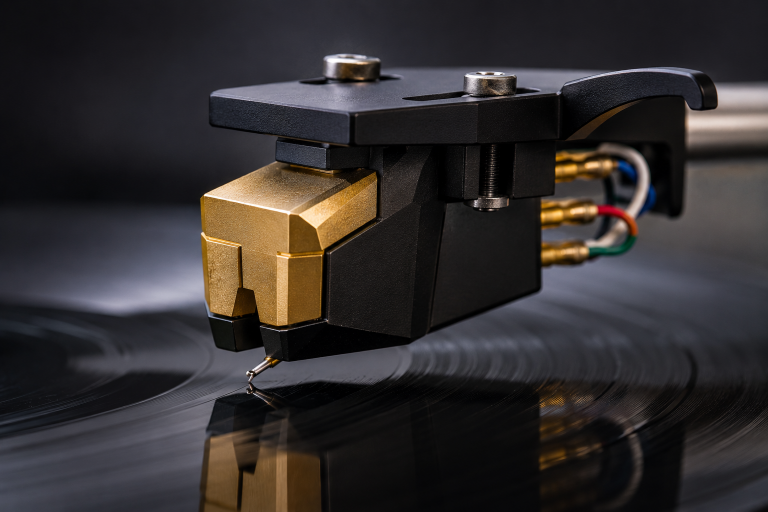
Audio-Technica’s AT-MCD1 Isn’t Just Another Flagship Cartridge—It May Be the Company’s Boldest Analog Statement Yet
You know that feeling when a new piece of audio gear drops, and suddenly every forum and comment section is on fire? Yeah, that’s happening right now with Audio-Technica. Every couple of years, the analog world gets a product that people start yelling about online before they’ve even heard a single note through it. Sometimes it’s a wild new turntable, or a tonearm that makes old-timers scratch their heads, but more often than not, it’s a tiny little phono cartridge. Which is kind of hilarious when you think about it—this thing is smaller than your thumb, and yet it gets people more riled up than a new amp or speakers ever could.
This time, it’s the AT-MCD1 from Audio-Technica, and man, did the internet have opinions the second it dropped. But here’s the thing—nearly all of that noise was about one single number: the price. We’re talking well into five figures depending on where you live, and yeah, Twitter and the usual hangouts were flooded with people losing their minds, asking how on earth a cartridge could ever be worth that kind of cash. And look, I get it. That’s a lot of dough for something that rides in a groove.
But honestly? Fixating on the cost is missing the whole point. There are already plenty of cartridges out there that cost a fortune, some even crazier than this one, so that alone isn’t what makes this release interesting. What actually got me hooked is the thinking behind it. Audio-Technica didn’t just slap some fancy materials on an old design and call it a day. They went after this tiny, persistent mechanical gremlin that’s been lurking in vinyl playback forever—a problem so subtle that most of us never even realized it was there in the first place. And that, to me, is way more fascinating than any price tag.
Replacing a Legend Was Never Going to Be Easy
So, here’s the thing—Audio-Technica’s ART Series has been this quiet overachiever for years now. Like, if you hung out with serious vinyl nerds, you’d always hear them arguing about Ortofon or Lyra or Koetsu or Benz Micro, those big-name heavy hitters that everyone loves to debate. But Audio-Technica was just there in the background, quietly proving they could hang with the best of them, no problem.
And the ART1000? That one was special. It wasn’t just another cartridge trying to play catch-up. They came out with this wild idea they called the Direct Power System, where they basically shoved the moving coils as close to the stylus tip as humanly possible. Sounds simple enough, right? But the whole point was to cut down the distance the signal has to travel before it even becomes an electrical signal, so less energy gets wasted along the way. Pretty clever, honestly.
That thing ended up being one of the most technically respected moving-coil cartridges of its era, and everyone just kinda figured, well, that’s it—that’s the pinnacle, they’ve peaked, what more could they possibly do?
Vinyl Pitfalls: How a Poorly Aligned Cartridge is Secretly Ruining Your Records
Turns out, the engineers at Audio-Technica didn’t get that memo.
Why Build Something New?
You’d think after you make something that everyone raves about, you’d just kick back and call it a day, right? But engineering doesn’t work like that. It never really stops, even when the reviews are glowing and the awards are piling up.
The thing is, every cartridge designer hits this same wall eventually. You do all the obvious stuff first—stronger magnets, lighter cantilevers, fancier suspension bits, and stylus shapes that sound like they belong in a science textbook. But after a while, the gains get so small you almost need a microscope to see them. That’s when it actually gets fun, though.
Because once you can’t just make things bigger or better in obvious ways, you have to start hunting for these tiny, almost invisible inefficiencies buried deep in the guts of the mechanical system. We’re talking about chasing a one or two percent improvement that might take years of head-scratching, whole new ways of making parts, and components so finicky they barely want to exist in the real world.
And honestly? That sounds exactly like what went down with the AT-MCD1. Somewhere in their labs, the Audio-Technica crew must have found one of those little gremlins and just couldn’t leave it alone.
The Joint That Almost Nobody Thinks About
If you ever get the chance to really stare at a phono cartridge up close, you’ll notice something that’s almost too tiny to see with the naked eye. The stylus—that little diamond tip that’s actually doing all the hard work—and the cantilever, the little rod it’s attached to, are almost always two separate pieces. They’re glued or mechanically clamped together with insane precision, using boron or aluminum or even fancy stuff like sapphire or ruby, and honestly, this approach has worked perfectly fine for decades.
But here’s the kicker—it’s still a joint. A connection. Every single time that diamond rides through the groove, the vibrations have to cross that little boundary before they can travel up the cantilever and finally get turned into an electrical signal. And yeah, the losses there are ridiculously small. Like, so small that 99% of listeners would never even think about it, let alone hear it.
But Audio-Technica thought about it. And instead of just trying to make that glue joint a little bit better or the fit a little tighter, they went and did something almost insane—they tried to get rid of the joint altogether. No connection means nothing to lose, right? And honestly, that’s probably the most mind-blowing part of the whole AT-MCD1 story to me.
A Diamond From End to End
So here’s where it gets really wild. The AT-MCD1 doesn’t have a separate stylus and cantilever at all—it’s one single, continuous piece of lab-grown diamond. Just one solid chunk from tip to tail. And I know, at first, that might sound like some nerdy manufacturing footnote that doesn’t really matter, but trust me, it’s anything but.
Diamond is already this magical material for cartridges because it’s stupidly stiff and super light, which means it can transmit vibrations crazy fast without flexing or bending when it shouldn’t. But by making the whole damn thing—stylus and cantilever together—out of one uninterrupted diamond structure, they’ve completely removed that little junction where energy used to have to cross from one piece to another. No glue, no mechanical fit, no interface for tiny amounts of vibration to get lost or bounce back.
Think of it like this: if you whack two separate pieces of metal that are joined together, the sound and energy don’t travel as cleanly as if you whack one single solid bar. The difference is subtle, sure, but that’s always been the name of the game in high-end audio—hunting down those little imperfections and wiping them out.
Now, will your ears actually pick up on this in the real world? That probably depends on how good the rest of your system is, because a cartridge this wild won’t show its full hand on a mediocre setup. But from a pure engineering perspective, you’ve just got to tip your hat to them. That’s a bold, ambitious move, no matter how you slice it.
The Body Matters More Than Many Realize
You know, it’s funny—whenever people talk about cartridges, all the hype goes straight to the stylus. That little diamond tip gets all the glory, and I get it, it’s the part that actually touches the record. But honestly? The cartridge body is just as important, maybe even more so in some ways.
Think about it—every single vibration that the stylus picks up has to go somewhere. Either you control it, or it finds its way back into the system and messes things up. Unwanted resonances are like uninvited guests at a party; they blur the details, dull the attack of transients, and subtly change the character of the music in ways you don’t really notice until they’re gone.
So with the AT-MCD1, Audio-Technica built the whole thing around a titanium housing with an aluminum base, and between them, they slipped in an elastomer damping layer. And this isn’t just them showing off with fancy materials for the sake of it. Titanium is super rigid but still lightweight, so it helps the cartridge resist those annoying mechanical vibrations that want to muddy everything up. The elastomer layer acts like a bouncer, stopping certain vibrations from passing between the different structural parts.
It’s a good reminder that designing a cartridge goes way beyond just magnets and coils and all that electrical stuff. Everything in the chain vibrates—literally everything—and the real trick is figuring out which vibrations you actually want to keep and which ones you need to show the door.
The Continuing Importance of the Moving Coil
With all the buzz around that wild diamond cantilever, it’s easy to forget that the AT-MCD1 is still, at its heart, a moving-coil cartridge. And moving-coil designs have always had this loyal following because they keep the moving mass ridiculously low. Since the coils are attached right to the cantilever, they can react to the tiniest wiggles in the groove with insane speed and precision.
But nothing comes for free, right? Low-output moving-coil cartridges are picky. They need a phono stage that can handle them, they demand careful matching with the rest of your system, and they usually cost a pretty penny to make. None of that automatically makes them better than a good moving-magnet cartridge—it’s not about one being superior, it’s just a different way of attacking the same problem.
At the end of the day, every cartridge is trying to do the same thing: turn microscopic mechanical movement into an electrical signal while losing as little information as possible along the way. The AT-MCD1 just takes that philosophy and cranks it up to eleven.
Is It Really Worth the Money?
So, here’s the question that’s on everyone’s mind, right? Is it worth it? And the honest answer is kind of simple and complicated at the same time.
Look, no cartridge that costs more than ten grand is ever going to be a good value in the way we normally think about value. You don’t need something like this to enjoy vinyl. People have incredible, goosebump-inducing listening experiences every single day on systems that cost a fraction of what this thing goes for. And that’s really important to keep in mind.
Products like the AT-MCD1 aren’t really for everyone. They exist for a completely different crowd. Their job isn’t just to play music—it’s to push the absolute outer limits of what analog engineering can do. It’s like Formula One cars. Nobody builds those because commuters need to get to work faster. Or luxury mechanical watches—they don’t keep better time than a cheap digital one, but that’s not the point.
Reference cartridges sit in that same weird, wonderful space. They’re proof of what happens when engineers get to chase an idea without worrying too much about what it costs to build. Whether that kind of pursuit lights your fire or leaves you cold? That’s totally up to you.
Could This Technology Reach Affordable Cartridges?
But here’s the thing that really gets me thinking—maybe even more than the cartridge itself. You have to wonder: where does all this trickle down?
Because if you look back at history, flagship tech rarely stays exclusive forever. MicroLine styli used to be this exotic, high-end thing that only the priciest cartridges had. Boron cantilevers? Same story—once upon a time, you’d only find those on elite, top-shelf models. And those powerful, rare-earth magnets that are everywhere now? They started out in the premium stuff. Even fancy suspension materials have slowly made their way down to more affordable gear over time.
So it’s not crazy to think that some of the wild manufacturing techniques Audio-Technica developed for the AT-MCD1 might eventually filter down into cartridges that cost a fraction of the price. And if that happens, today’s flagship will quietly end up shaping tomorrow’s midrange products, with most listeners never even knowing where the tech originally came from.
That’s kind of how innovation works, isn’t it? The crazy expensive stuff today becomes the normal stuff tomorrow, and the cycle just keeps going.
More Than Just Another Luxury Product
Look, it would be really easy to just write the AT-MCD1 off as yet another crazy-expensive cartridge for rich collectors with money to burn. And honestly? I don’t think that’s the right lens to look through at all.
Whether anyone actually buys one or not kind of misses the point. What actually matters to me is that we’ve got companies like Audio-Technica out here, in 2026, still pouring serious resources into making vinyl sound better. Think about that for a second. Decades after everyone and their mother declared records dead, these engineers are still tinkering away, finding new ways to squeeze more music out of a little groove in a piece of plastic.
Streaming is everywhere. Digital tech keeps getting more advanced by the day. And yet, here we are, still obsessing over a format that’s been around since before my parents were born. There’s something beautifully stubborn about that, isn’t there?
The AT-MCD1 isn’t just another flagship cartridge to me. It’s a statement. It says that analog playback still has room to grow, still has secrets to uncover, still has a future. And honestly? That might be the most exciting part of the whole story. Long after the naysayers wrote vinyl off, engineers are still figuring out how to make it sound even better. For anyone who genuinely loves records, that’s a future worth sticking around for.